

Our expert guide to spring and summer garden bird feeding
View All BlogsGoing back many decades, the case for feeding garden birds during the spring and summer months was very much up for debate. But that was before the real effects of climate change, the damage done to ecosystems by intensive farming, and the resulting decline as the result of both on insect numbers and that of other invertebrates.
This means that the general consensus now from experts, is that feeding garden birds in the spring and summer months makes sense, but with the major caveat that best practice on all aspects of minimising disease transmission are deployed. This best practice is largely about hygiene, but there are other factors such as frequently moving feeders about. Our comprehensive guide gives you all the information you need, read here.
There are a number of reasons why there is an increased disease transmission risk in the warmer months, with one of the key ones being that the parasite which causes the disease Trichomonosis which is responsible for killing so many of our Greenfinches and Chaffinches, survives longer out of a host bird in warm and damp conditions. It’s also the case that an infected bird may transmit the fatal disease to one or more of its young when feeding them.For more information on Trichomonosis, have a look here.
The right bird foods during the breeding season to help ensure brood survival
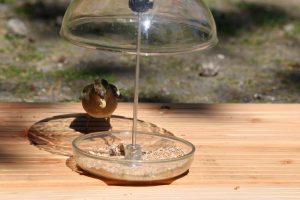
Female Chaffinch collecting Waxworms for its young in the nest
A key principle of feeding garden birds in the spring and summer months, is to take account of the fact that at least some of the food you put out will be fed to chicks in the nest or fledglings once they’ve left the nest. In an environment away from gardens where songbirds like Robin, Blackbird and Dunnock are entirely dependent on natural food, much of what they collect for their young would be insects and other invertebrates. To a lesser extent this also applies to songbird species which are generally seed eaters, with an example being different species of finch. The reason most adult songbirds do this is because their young need protein to quickly grow and develop, plus moisture to keep them hydrated – and invertebrate food is full of both.
Providing live foods is key to success
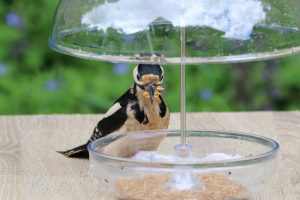
Even species like this Great spotted woodpecker will readily take Live Mealworms for their young
With flying insect numbers having declined by a staggering 60% over the last 20 years in the UK, the very best way to help compensate for the lack of natural food is to provide Live Mealworms and / or Live Waxworms. Mealworms are the larval stage of a species of beetle, and Waxworms the larval stage of a species of moth. Both are full of protein and moisture, and the perfect food for chicks and fledglings. Adult birds will also eat them, which helps give them energy at their busiest time of year.
If you’re new to feeding live foods and want more information on what’s involved, then read our guide here.
How about dried mealworms?
Dried Mealworms are a somewhat poor substitute for live, but none the less do provide some nutritional value for birds. However, if they’re put out during the spring and summer months, then it’s absolutely essential that they’re firstly soaked in water before doing so – and for at least 30 minutes. Failure to do this could be fatal for chicks in the nest if parent birds were to feed the mealworms to them in large quantities – which species like Starling and Blackbird may attempt – because of dehydration. On a related note, another bird food which must be soaked in water first is Sultanas.
Reducing the other types of bird food you put out - but only from early May onwards
All the other usual types of bird food including seed, seed mixes, peanuts and suet products can continue to be provided throughout the summer, but generally speaking in reduced amounts. So perhaps fewer feeders and without the need to keep them topped-up in the way you should during the winter months. Doing this helps encourage birds to look for natural food and at a time when it’s more available (albeit nothing like at historic levels), plus if you’re also feeding live foods, then dry food like seed is much less required. When you do reduce the level of feeders and food, then it’s best to do so gradually over a period of a week or so, rather than all at once. For any suet products you continue to use, it’s important that these are positioned in shaded areas as direct sunlight, and therefore heat, can make the fat overly soft, plus cause the product to deteriorate as bacteria quickly multiplies.
Where you live also has a bearing on spring and summer bird feeding
Another factor to consider when deciding what to feed and in what quantities, is simply where you live and what the environment is like around you. For example, if you’re fortunate to live in a rural area which has mature native woodland very close by, then natural invertebrate food is likely to be relatively abundant. However, if you live in an urban area with a high concentration of housing, or a rural area which is intensively farmed, then natural invertebrate food is inevitably going to be in short supply.
And not forgetting natural and farmed seed
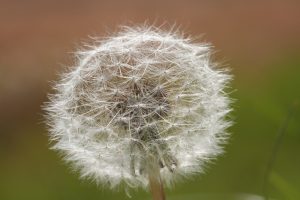
Dandelions are one of the first wildflowers to go to seed, and provide an important food source for Goldfinches and Bullfinches
With many homeowners with gardens and also local councils taking a more sympathetic view on wild flowers such as dandelions, there’s been a clear benefit for birds that feed on the seeds, such as Goldfinch and Bullfinch, which can occur as early as April as the plant flowers very early in the season. Then later in the season, more wildflowers go to seed, and notably from July onwards, plus some crops from farming are also beneficial – e.g. oil seed rape, of which some finches and also species of bunting will eat the seeds.
So again, you can take your location into account and the level of natural seed available when deciding what and how much bird food to provide in your garden.
Final and very important point
As we set out at the beginning of this blog, keeping garden birds safe from disease transmission must be the first priority when feeding during the breeding season – or at any time of year for that matter. If you’re not in a position to follow the key guidelines outlined here, then it would probably be better not to feed the birds at all – it’s that important.