October has been mild and damp with an average temperature above the 50-year average of 11.25°C, but below the average of the last 10 years, which has been 11.4°C. The only frost we’ve had was a slight one, on 26th October. Rainfall has been about 10mm above the average, at 57mm.
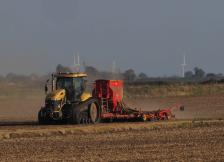
Rainfall amounts for October have suited us; the soil has kept moist enough so that the potato harvester could work well, and the barley and wheat seeds that we have been planting have been able to germinate. We’ve only had one or two days when we couldn’t harvest or sow. That wasn’t a problem, as when machines have been working for a week or two, there will always be some maintenance required. The previous two autumns were far too wet; it was hard work for our machines, hard work for the men and we damaged the soil as we worked in the fields.
If we have a very dry October, the soil then becomes too dry, which makes it hard to make a nice seedbed for the wheat and barley, and potatoes get bruised in the harvest. But, overall, it is more pleasant to be farming in a dry time than a wet time, here in the Fens.
The above average temperatures of the summer had brought our sunflowers on to ripen earlier than usual, and we harvested them all during the first week of October. It’s not usually a month when there are many combining days, so the earlier we can harvest them the better, as Wood Pigeons like to eat them. They also like to eat acorns, and as there is a good crop of acorns this year, that could be one of the reasons why we didn’t see large flocks on the sunflowers. Another reason could be that we get a lot of Wood Pigeons migrating from Scandinavia during October and the sunflowers were harvested before they arrived.
Everyone must have noticed that there has been a good crop of all our hedgerow fruits and this is due to the above average sunshine and below average rainfall throughout the summer. If it is sunny when a crop, tree or bush is in flower, it will be visited by more insects, and more flowers will be pollinated. Most insects will not be flying when it is raining.
We finished harvesting our potatoes on October 28th – you could say on schedule, as we don’t want to be harvesting in November, as it is usually hard work for men and machines, with more breakdowns. We’ve had big crops, harvesting more than we usually do despite the dry summer, even the crop we didn’t irrigate yielded well. That was also the case for many farmers, which rather points to a surplus and so prices for those potatoes not on contract are falling. Those potatoes that are on contract are being examined very carefully, when they arrive at the pack house, to find an excuse to be rejected.
It is much the same with wheat and barley; prices are lower than they have been for many years as there is a surplus of grain world-wide. Australia and Argentina are predicting record harvests, so prices could go down even further.
We’ve only had six pairs of Barn Owls breeding on the farm this year, one of them laid eggs in April and reared four chicks, the other five did not lay any eggs until early July. I visited them when their young were a few days old, and again when they were getting feathers, and they all had one young less, meaning that voles were still not very plentiful as one young in each brood had been eaten. Being dry as it has been, voles should have kept breeding and that does seem the case, as I haven’t seen any Barn Owls flying in daylight for the past month.
We have several Stonechats on the farm; they’ve obviously had a good breeding season. They don’t nest in the Fens; they like to nest in gorse bushes, on hilly land that is farmed extensively, rather than intensively. They’re only with us in the winter and will be in areas where the summer growth is still standing, looking for any insects that move. I really enjoy seeing them.
The last four weeks haven’t been an interesting time on the farm, as all our summer visitors have left and our winter visitors are only just starting to arrive. It is the time when I record my last sightings of a Swallow, which I have been doing for 65 years. In the 60s, 70s and early 80s, I could see Swallows right up to the middle of October – and often a week later. They started leaving earlier and now I can only be guaranteed seeing one up to September 20th. These aren’t the Swallows that have been breeding here, they are coming from further North, or even Scandinavia. The Swallows that have bred here leave in the first week of September and I presume they leave earlier because of a lack of flying insects.
Sad news isn’t it. What can we do about it?
Not much, I’m afraid. To do something about it, the world has to slow down; at a wild guess to reduce our population by 50% and halve all our contraptions that use oil and, of course, that isn’t going to happen.
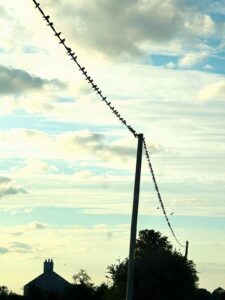
But cheer up, the first half of November is the time of year when we have the most birds in our area! Take a look across the fields, some will have lots of Lapwings, Golden Plover, Starlings, Whooper Swans and Wood Pigeons on them, usually fields that were or are oil seed rape or maize. These birds have come from the North, to get away from ice and snow.
On October 29th, I was watching a field containing over 1,000 Lapwings when something put them all up. Suddenly, I reckoned there were about 3,000 birds in the air – Lapwings, Golden Plovers, Starlings, Rooks, Black Headed Gulls and a few Wood Pigeons. I have also noticed more Blackbirds in the Vine House Farm garden, and you will soon see Fieldfares and Redwings feasting on berry laden bushes.
15 years ago at the nature reserve at Deeping St James, there was a lovely collection of water-birds: Common Terns, Ringed Plover, Redshank and a few more, and then a pair of Lesser Black Backed Gulls moved in. Then the next year there were two pairs and they kept increasing over the years until there were no Ringed Plovers and Common Terns. The LBB Gulls were eating all the smaller birds’ chicks. Then an Otter moved in and ate all the LBB Gull chicks. Now there are no birds nesting on those islands successfully. The Otter will run out, or has run out, of food and will have to move on.
What will happen when we have destroyed all the wildlife and used up all the earth’s resources – where will we be able to move on to?
Related Articles