


Despite the cooler second half of the month, August was still warmer than average at 18.6°C. The warmest August I have recorded was in 1997 when we had eight days when the temperature was above 30°C. This summer we’ve had 10 days above 30°C and the temperature on August 13th this year of 35°C, was the warmest August day I have recorded.
From June 17th to August 16th, I only recorded 2.2mm of rain. The 45mm of rain on 27th August has transformed things for us on the farm. We’ve now been able to drill oilseed rape, and the sugar beet and potatoes are all benefitting massively.
The first two weeks in August put a lot of strain on the sugar beet and potato crops, especially as it was already so dry, so we like everyone else have been pleased to have the cooler weather.
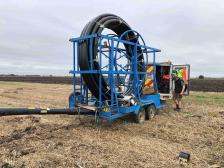
It has been one of the easiest harvests on record, a non-stop harvest, with the combine easily coping with all the dry crops that have been flowing through it. Combines don’t like damp conditions or damp crops. If they are too damp, they block the combine, and it’s not an easy job to unblock it.
Nearly every harvest we have to dry some of our crops and we’ll still have to dry the sunflowers that we usually harvest in October. However, this year we will hopefully be harvesting them in September.
This year we have had to cool our grain; it doesn’t keep well when it’s warm. If there are insects in our grain store, they reproduce very quickly in warm surroundings. We cool it down by blowing air into the crop in the early mornings. All our stores have a fan connected to underground air tunnels, to dry or cool grain. After the crops have been sold and the store is empty, we sweep, blow and disinfect all our stores which hopefully makes our stores insect free. The insects that could be a problem to us do not come from the fields, they are insects that live in grain stores. Some of them being so small are invisible to the naked eye, but in large numbers they heat the grain up and ruin the crop.
The price of wheat has risen from £170 a tonne to £200 a tonne, partly because Europe has had a poor harvest but mainly because of what is happening in the Black Sea. Novorossiysk is Russia’s largest port and Ukraine has put it out of action. Odessa, in Ukraine, is only operating at half speed.
Our wheat harvest this year has been a poor one, our light land has especially suffered. But so too have crops that were drilled last year, following the potatoes and sugar beet, due to the conditions.
We have now finished irrigating our potatoes, some fields have responded well to the irrigation, and some have not done so well. There are bound to be less tonnes per acre this year and so that should raise the price sufficiently for us to make a profit on them this year.
Tawny owls are the commonest of the five species of owls found in the UK, but here in the Fens, Barn owls are more common and they are the species that we see flying around. It is of course a pleasure to see one flying during the day, but its not good news for the owl as it means it is hungry.
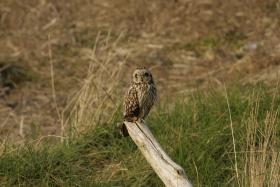
Another owl you might see is the Short-Eared owl. To most of us, they are a winter visitor and a bird of the open country. Quite often they fly in the daytime, roosting and breeding on the ground in long grass, and feeding on voles similar to Barn owls. They nest on our moors, and the tundra in Scandinavia. Their cousins, the Long-Eared owl nests around here in South Lincolnshire, but they are very nocturnal, they can be seen roosting in trees amongst ivy at Deeping St James nature reserve.
Barn owls cannot hunt successfully in wet or windy weather. They hunt entirely by sound and when there are rain drops pattering on the vegetation, they have to remain under cover as their feathers are not waterproof. Barn owls are one of very few birds that have not evolved to have waterproof feathers because there is no need for them to be waterproof, presumably it takes more energy to grow a waterproof coat.
Several people have said to me this summer that there aren’t many Barn owls about this year. That was partly right but because there were plenty of voles around, they weren’t flying in the daytime. They averaged about three young per pair on the first brood and because there are still plenty of voles around, more than half of them are having a second brood with an average of seven eggs per pair.
The Tree sparrows on the farm are proving quite disappointing, but that is no surprise as they have been declining for the past nine years. Wherever I go in Asia I see Tree Sparrows. I don’t have to look for them, I hear them chirping away – from Varager fjord in Norway, 70° north, to Everest base camp where the vegetation is only 2ins high, down to Saigon in Vietnam, where they are sold cooked and ready to eat on the streets.
This year I started with about 25 pairs but as the summer went on I only had 10 pairs in July, rearing broods of two or three whereas 10 years ago, July would be a time when they were all producing broods of four and five.
Moorhens in the Café pond have been doing well; they have a third brood of five, which the first brood have been helping to look after. The second brood has disappeared and a stoat has been seen around the pond. Meanwhile the Moorhens on the Farmhouse pond have also produced three broods, but I don’t now see any of those young birds, just the two adults.
The Café pond has been full of wildlife; a brood of six ducklings has been there for the past month and dragonflies are constantly buzzing around. House sparrows have been coming from the cottages to collect insects for their young and a pair of Reed Warblers have reared a brood in the reeds.
Related Articles