

With a total of 80mm of rain, this made it the 3rd wettest February I have recorded since 1970 and I am sure many of you have had more rain than we have had. It makes it the wettest winter I have recorded, with 334 mm or 13.1 ins, in the last four months. It has also been a warm month, with an average of 6.65°C, with only the Februaries in 1990 and 2024 being warmer.
You could say that we have been paying for that lovely summer we had in 2025. I am pleased to see the back of February as the wet weather has been frustrating, but not disastrous. There were a few jobs that could’ve been done on the fields, such as applying the first dose of Nitrogen on the rape, but we weren’t able to do so. We will have to wait until weather conditions allow us to travel on the fields.
We have four fields that have standing water, one is due to an issue where there is a pan or hard layer and water cannot get through that hard layer. We have two other fields that need draining and a fourth field that we are unable to get the water away without spending a lot of money and time doing maintenance every year. At the moment, we don’t think that its worth it, but if these wet winters continue it might be worth having it drained.
The very wet winter has of course caused flooding in many areas, although we are only one metre above sea level; sea level being the difference between high tide and low tide. We’re not likely to get flooded as the water is taken away from us by our local drainage board, the Welland and Deepings Internal Drainage Board.
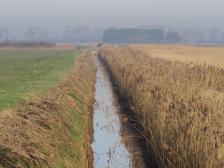
Drainage boards are run by farmers and local councillors and I am one of the farmers on our board. Our drain sides are cut every year as well as the watercourse, so the water can start moving as soon as the pumps are started. Previously, the sides of our drains were kept so neat and tidy that there was no habitat for any birds in which to nest or hide.
However, that was before I joined the board in 1980. At the second meeting I attended, I asked the chairman if there was any need for both sides of our drains to be cut twice a year. They said there was, but I persuaded them to only cut once a year. As the Chairman went out of the meeting he said to the Vice Chairman (so the Vice Chairman told me a few years later): ‘I think we’re going to have some trouble from this new chap’.
A few years later, I suggested that we only cut one side of our main drains once a year and so we soon had a wildlife corridor with all sorts of birds nesting in this uncut side of the drain. Not only did this attract Reed Warblers, it also attracted my attention. In 1998, I went looking for Reed Warblers nests and could find a nest every 40 yards along the drain side, which attracted Cuckoos. Since then I have dug ponds and persuaded the board to cut only one side of more drains each year. The Brown Tail Moth moved in, which is food for the Cuckoo and we now hear and see a Cuckoo every day, in May and June.
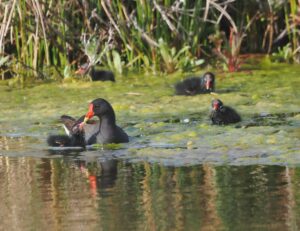
In February, it might seem that there is not much going on with wildlife; we might think they are just spending all their time looking for food, but that is not so. We have had two pairs of Mallard on our pond in the garden during January. At the beginning of February both pairs disappeared for about 12 days. Only the drakes returned – had they had a divorce? No, the ducks were sitting on eggs. The drakes stay with their partner while they lay an egg every day and once all the eggs have been laid, it is best for the male to keep well out of the way, leaving the ducks with camouflage, to conceal herself while sitting on the eggs.
Lapwings were moving north, and around the middle of February we had 3,000 Lapwings on the farm, with more big flocks of Lapwings recorded in other places as well. Two pairs of Oystercatchers returned to our wetland to reclaim their territories from last year and of course the birds have started to sing. Before dawn, I have heard Robins, a Song Thrush and a Blackbird and, when it is daylight, a Great Tit and Dunnock have been very vocal.
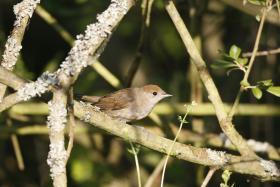
One bird we have not had before, in the farmhouse garden during the winter, is a Blackcap. However, we’ve had a female on our feeders since the middle of January. The feeders are only around seven metres away from the breakfast table, but such is the drab plumage of the bird – a very grey bird with a small brown cap – I had to get my binoculars out to confirm what I was seeing. I then thought how many female Blackcaps are there feeding at feeder, that are mistaken for Sparrows? On February 26th, a male Blackcap joined the female. It was more recognisable because its black cap shows up a lot better than that of the female.
Blackcaps normally winter in North Africa, but over the past 20 years there have been some that have stayed in the UK. A warbler’s diet is usually all insects, but obviously Blackcaps have adapted to live on fat and seeds, which saves them the journey to North Africa and back. The Blackcaps that winter here move over to Germany for the summer.
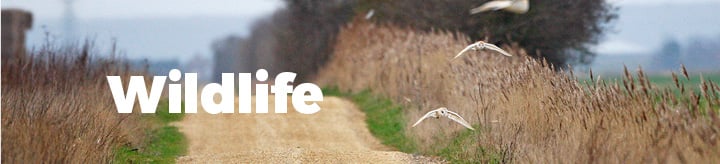
Barn Owls have been conspicuous by their absence. I saw one on February 26th, only the second one I had seen the entire month. That’s good news as it means, despite the wet weather, there have been plenty of voles around for the Barn Owls to feed on. The voles and the Barn Owls will not have liked the wet weather, but seem to have come through the winter OK.
The Turtle doves that we have been keeping over winter have wintered well, and it won’t be long until the end of April when I shall be listening to see if I can hear any doves that have returned to our site from last year. At the end of May, we will be releasing these doves so that they can be nesting in the various habitat in the area. Our man in Suffolk is ready to start breeding them again. Vine House Farm supplies food for the scheme, but the Trust needs funds for rings, nets and general maintenance. Any donations will be gratefully received and should go direct to the Turtle Dove Trust or please send a cheque to the address below, made out to the Turtle Dove Trust. Thank you.
Related Articles