


It has been a mild month, an average of 7.8°C, well above my 50-year average of 6.3°C and above the 10-year average of 7°C. More importantly, it has been a dry month only 14mm of rain. March on average is our second driest month, February being the driest; we have had nine drier Marches in the last 55 years.
Basically, it stopped raining on February 28th, about the right time for us to start our spring work and that was the same in 2020. After a very wet winter, it stopped raining on February 29th, 2020, the sun shone, the wind blew and we were on our fields in a week. The sun continued to shine, and the wind kept blowing and after another week our land was so dry, that there wasn’t enough moisture in our soil for the seeds to germinate.
The sun and wind have not been so severe as in 2020, but here we are at the end of March with not enough moisture for seeds to grow. But it is nice to be farming without soil sticking to my boots, and the days are getting longer and the birds are singing. On other soils there could well be enough moisture for seeds to grow but not here. It is the amount of clay in our soil; there is not good capillary action in clay soil. Capillary action in soils is the ability the soil has to draw water upwards against gravity. Silt soils are very good at this; clay soils are not. Once the seeds have taken root, the roots will go down and find the moisture, and we can withstand a drought once the seeds have got a foothold.
We started drilling sugar beet first, as it is a small seed and doesn’t want to be more than 2inches deep. Barley, beans and oats can be drilled deeper and into the moisture.
We are sending potatoes to McCains this week. In three days, four men can get 700 tonnes dispatched. Fifty years ago, five men at this time of year would only be able to get 10 tonnes a day ready for market. The potatoes would be in a grave or a clamp, first the soil would have to be taken off the clamp, then the straw. The potatoes by April would have started sprouting and those sprouts would have to be rubbed off, the potatoes would go in 50 kg bags, and they would have to be loaded on to a lorry one by one as there were no forklifts on farms in those days.
Today our potatoes are stored in tonne boxes, those are tipped into the potato grader hopper, which is six feet wide. They are inspected as they go over the grader, up an elevator and into a lorry at 25 tonnes per hour. There will be 10 electric motors and two forklifts working. Fifty years ago, there would only be a 2hp petrol engine to power the grader, along with human muscle and sweat.
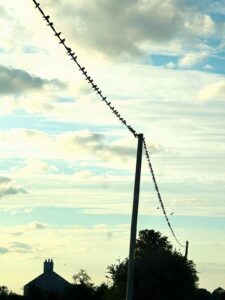
Our winter visitors have been leaving, nearly all the Wigeon and Teal have left our wetland, and Fieldfares have been passing through. I am now waiting for our summer visitors to arrive. I have been hearing Chiffchaffs since around 20th March, and I saw a lone Swallow on 29th March.
We’ve had a female Blackcap feeding in the Vine House Farm garden now for over two months. It spends more time on the feeders than any other bird. Its preference is the suet blocks, but it also goes on the seed feeder and apples when I put them out. Blackcaps are usually summer visitors, but there is a small population that nest in Germany and come to England for the winter. I would expect to hear my first Blackcap singing around 10th April and it will most likely have come from North Africa or Spain.
Swallows that nest in the UK spend the winter in Natal in South Africa. They are a declining species, as there are not enough flying insects in Eastern England for them to rear two broods of five. If they’re not leaving here with sufficient fat reserves to be able to complete their journey to South Africa, they might not get there. We all know that there has been a huge decrease in insects here in the UK, as we no longer see them splattered on our windscreens.
There has been a significant decline in Blackbirds in the Deeping St Nicholas village over the past five years. When I came out of my house at dawn in March, six or seven years ago, I was unable to say how many Blackbirds were singing, there were so many. But they have declined so much that this spring there are only two singing. It may well be the Usutu virus which is a mosquito-borne disease, causing significant mortality in UK Blackbird populations, particularly in the southeast.
First detected in the UK in 2020, the virus causes lethargy and neurological issues, resulting in a 40% population decline in Greater London. It thrives in warmer weather and has been present in Europe for decades. I haven’t noticed any lethargy in the Blackbirds here, maybe when they have got the virus, they go out of sight and get lethargic.
Wood Pigeons are everywhere in and around the farm pecking away at everything. We have planted a lot of Mahonia in the Wildlife Garden; it comes into flower during the winter and now the berries should be showing well, but there are very few of them except on the bush next to the Farm Shop. The Wood Pigeons are eating them, although they are very under ripe, as they don’t come ripen until June. We also planted a lot of Pyracantha – both Mahonia and the Pyracantha for Blackbirds, but as the Blackbirds have declined, the Wood Pigeons have become braver and are coming into our gardens more, and they have stripped the lot.
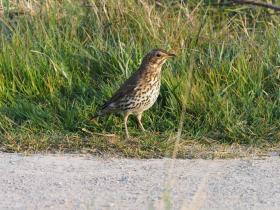
We still have a Song thrush that sings loud and clear for most of the day and there is still a Mistle Thrush in the village as I have heard it singing in our trees twice now this spring but sadly in general, wildlife is just slipping away.
Thank you to all of you who have donated to the Turtle Dove project, all donations are gratefully received and will be given to Trevor, in Suffolk who rears the Turtle Doves.

Related Articles