

We all know April was a dry month, in fact it was the driest I have recorded with only 1.8mm falling. April 2007 was very dry with only 2.5mm, but April 2011 was also very dry with 2.3mm. In March that year, only 3.9mm fell following a very dry winter, so it must have been very dry by the end of April. We have had several quite warm nights this month which have resulted in April 2026 being the second warmest April I have recorded.
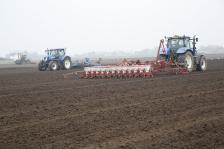
The dry weather continues. We’ve been drilling the fields where the seeds would grow and irrigating other fields first, then drilling them. We have some fields which we can’t irrigate, so if we don’t get any rain, we won’t be drilling them. The winds in the last few days of April were very searching and really dried out the land.
We’ve more spring drilling than we used to have, as we’re trying to keep on top of the blackgrass problem. Blackgrass is an autumn germinating grass which produces thousands of seeds. It can reduce wheat yields by half if we let it get out of control. There is a saying: “one year’s seeding means seven years weeding”, so if the Blackgrass gets out of control in one year, it will be seven years before we have it under control again!
Greylag geese have been grazing our winter wheat in four fields, which has become a problem. They have stopped it growing in some areas, but as they tend to keep away from vehicles, we’ve put a tractor in those fields on goose-watch. One of our neighbours had trouble from Rooks digging up emerging seed. He has put a bright yellow van on Rook-watch, but it’s not fooled them as they are back on the field all around the van.
It’s been a good spring for getting our poultry manure spread. Quite often it is too wet in the spring, so it gets spread in the autumn. It doesn’t all get into the plant when applied in the autumn, as some of it will leach away during the winter. Poultry and cattle manure is not always looked upon very favourably. It smells, and in hilly terrain, can pollute some of our rivers. Here in the east, on our flat land, we use what our own free range hens produce and could use a lot more.
By the time you read this we will have all the potatoes planted and, like all other growers, a few less than last year. We’ve also heard that some big growers have only planted 50% of their usual acreage. The 2025 harvest produced a larger yield than usual, despite the long hot summer. That high yield, coupled with reduced consumption and more people going for processed potatoes, such as crisps and chips, has brought about the large surplus in the fresh sector. Potatoes are a basic food, and most people can afford a bit more than basic foods these days. There are those people who are saying food is far too expensive, but they have no idea of all the hoops growers must jump through and the costs involved to get the wonderful display of fruit and vegetables that we can see in the shops today.
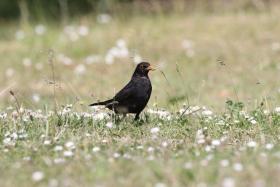
We sell more bird food in May and June than in February and March, simply because the birds need it. When I feed the birds in my garden in January or February, it maybe two or three minutes after I’ve gone back indoors before any birds come to the food, but in May, there are birds at the food before I have shut the door. Birds are busy at this time of year, they are building nests, laying eggs and feeding young and, quite simply, they need more food.
We only get one harvest each year and by now that harvest has all been eaten up. There is less growth in our gardens than there used to be; most of us no longer grow our own vegetables, there are less native herbaceous borders, and we have smaller gardens having made space for cars. Farmers have specialised, there are fewer mixed farms and there are far less weeds in our crops, partly because we use pre-emergent weed killers. Weeds compete with our crops, and too many reduce the yield, so it is in our interests to prevent the weeds. Our grassland has also been modified, quite often it is made into silage before any birds or insects have been able to rear a family.
We have more houses and our roads are busier than they used to be, every motor vehicle is a fly swatter and so it goes on.
There are a few of us that try and do our bit for wildlife, but we are in the minority. Most people in this world are just pushing wildlife to one side – not intentionally but just going about their daily duties.
Wildlife is in big trouble, so it was a big surprise to me when the RSPB advised not to feed seed and peanuts during summer months after May 1st. Not feeding seed in summer months will hasten the decline of birds.
The RSPB are worried about Trichomonosis affecting Greenfinches and Chaffinches, which are just two of the species I feed in my garden during the summer.
We have several sites where I feed Tree Sparrows, and two sites where I don’t, and at those two sites Tree Sparrows have disappeared. When there are no voles around, Barn Owls don’t even breed but when there are plenty of voles around, they have two broods. Food is the driver and when a species has a surplus of food it will increase in numbers. An example are Magpies, to which we serve breakfast on our roads every morning. Many of our smaller birds are unable to rear enough young to maintain their population because of a lack of insects, that is why they are in decline.
What we must do is to keep our feeders clean, wash them every week to stop the Trichomonosis spreading from bird to bird.
We had two young Robins, around our feeding area, for a few days in the middle of April – they were there one day and gone the next. I have no idea if they are still alive. If young birds have a shortage of food, they are having to move around a lot and more likely be noticed by predators, but if there is plenty of food around, they can sit quietly when they’re full, under or in a bush out of harms way.
Our Farm Tour season starts on 16th May. Join us on our conservation award winning farm to see many species of breeding birds. Learn how we grow our bird seed and how we manage the farm with wildlife in mind. Tickets available on our website here or call 01775 630208.
Related Articles