

October was warmer than usual with a mean of 12°C, we have had several warmer Octobers. Rainfall was also more than normal with 64.5mm, our average being 48.5 mm. Although the country hasn’t had enough, we have for the time being.
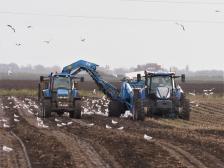
October is probably the most important month of the year for potato growers, every day gets shorter and it may get wetter. So it is a race against time and when it gets too wet, we don’t get all the work done. It was looking a bit like that on 23rd October with our first storms of the season. Three inches of rain were forecast over the weekend. That is 300 tonnes of water per acre, but fortunately all that rain didn’t fall on us, we only had 50 tonnes per acre, around 0.5 inches. Potato lifting and wheat drilling are now going well and we finished potatoes in the first week of November. We were able to irrigate every field but one, and we are pleased with the results.
We had problems keeping the pigeons off the emerging sunflowers back in May, resulting in gaps in the crop, but because of the hot sunny summer, the sunflowers did very well, the best of all the unirrigated crops. We finished harvesting them on 17th October.
Having had two dry summers in a row and spring crops not performing well, we wonder if that will be the normal going forward. Winter crops have done so much better than the spring crops, but too many winter crops means more pressure from blackgrass. A bad infestation of blackgrass can reduce crop yields by half, so the way forward for us is to still go for spring crops, but maybe not quite so many of them. There is a saying ‘one year’s seeding, seven years weeding’.
Crops need attention to detail and require spraying at the right time and in the right conditions to kill all the blackgrass seedlings. One opportunity missed because of the weather, or because you wanted to go out, could mean a field full of blackgrass, and all that seed is waiting to grow at every available opportunity. Another slip up two or three years later and you’ll have a field with even more blackgrass.
The seeds only remain viable for five or six years and it is an autumn germinating plant, so it can be eliminated if you were to keep growing crops drilled in the spring. But, if you have a heavy infestation, some of it will also germinate in the spring. The later you drill in the spring the less blackgrass germinates.
To drill a crop when blackgrass doesn’t germinate has to be in May, but only millet and sunflowers are suitable. Then there is the problem whether the crop will grow as the soil may have dried out.
Arable farmers all over the country are having problems of what to grow. This is down to changing climate, drier and warmer summers, financial pressures and weed pressures. In most areas, autumn sown wheat, which we call winter wheat, is the most reliable crop but it cannot be grown continuously and there is very little profit, if any, in growing spring planted crops. The rape crop I spoke about last month is not a disaster. The plant population is there, but not as big as we would like to see it, now that it has survived the flea beetle it also needs to survive the cold winter weather and pigeons. It also needs to be thick enough to compete against the blackgrass.
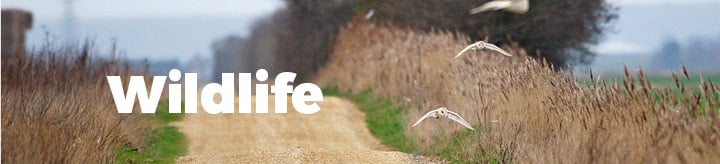
The Barn Owls that did not desert their eggs carried on and reared two young each. There are still several voles around as there are still Herons in the free range chicken field catching voles. We drilled a conservation mix in that field and I expect if we had drilled it with a straight rye grass, those voles would not be there and the Herons wouldn’t be there either. I do like to see birds around the farm.
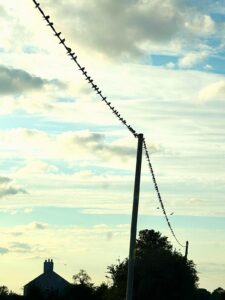
October is the month when we have the least amount of birds on the farm as all our summer visitors have left. But in the last week of October birds were arriving from Scandinavia; there were about 2,000 pigeons on a field near North Drove and another 2,000 on a field that has been millet in Baston Fen.
I also saw a flock of 500 Lapwings this week and Starling numbers are building up. Families of Whooper Swans are also arriving, they will stick together all winter and fly back to Iceland in the spring with their parents. The young ones will probably not breed in their first or second summer. The adults will return to breed where they bred last year, well away from other breeding pairs.
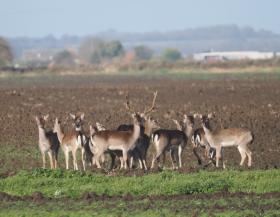
About 40 years ago we started seeing Fallow deer during the spring and summer, they were coming from west of Bourne and they always went back in the autumn for the rut. Numbers have increased and we now see them all through the year.
We started seeing Roe deer about 25 years ago and their numbers have built up and I would say that I see two or three nearly every time I go down the farm. On the whole, it is nice to see them but it is what some of them do at night that has been really frustrating. They have been coming into the Café Wildlife Garden and eating all the flowers on the pansies. We had to put an electric fence up and that seemed to deter them. The pansies came in flower again and the deer came, jumped the fence and ate all the flowers again. Plans are afoot to use some longer stakes and raise the fence!
I’ve yet to find out why deer are increasing in numbers all over the country. I put it down to maize. Fifty years ago, no-one grew any maize and now there is a lot grown for pheasant covers, biogas and feeding animals. Maize is a very nourishing food and it also gives the deer somewhere to hide.
Other than deer, there are two species that have done very well this year, and one is the Grey squirrels, I am seeing far more than usual. A friend who has two Walnut trees has counted 13 of them, he usually only sees two or three and they have eaten most of his walnuts.
The other is Jays – everywhere I go I can see one. There has been a big influx from Scandinavia; we have had these influxes before but not so large as this one. At Holme nature reserve on the North Norfolk coast on one morning’s ringing session, they caught 16 Jays – a record.

Related Articles