

The last 10 days of May made it the second warmest May, the average being 14.24°C, 2024 being the warmest. With only 11mm of rain falling, it was the 5th driest May I have recorded, (I didn’t record any rain in May 2020) and there’s only been 27mm of rain in the last three months. 2011 was drier, and also our driest year in the 56 years I have been recording the weather.
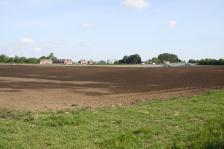
Our wheat and barley crops have been savaged by the unseasonably hot weather during the last week in May. I’ve never seen wheat crops come out in ear so quickly; one day the ear was not visible and the next day they were all out. It’s the high temperature that brought them out and with only 26mm of rain since the beginning of March, it has put a tremendous strain on the crops to go through their growth stages so quickly.
The seeds we grow for bird food are sown in May and most of those millet crops wouldn’t have grown without irrigation. The sunflowers this year are on fields that we’re unable to irrigate and there is only half a crop at the moment, so not good news.
Potatoes are just coming up so the plants won’t have been going through the same stress as our cereal crops. Most potato growers are growing less this year, including us, in the hope that 2026 will have better prices than 2025. Nobody knows if we are going to grow a bigger or smaller crop than normal and we don’t know how many potatoes will be consumed, especially as the trend is to eat less potatoes, in favour of pasta and rice instead.
We could easily grow more carrots, cabbages and cauliflowers, but they do not fly off the shelves like broccoli and green beans – which we can’t grow in the winter.
There only needs to be a 10% increase or decrease of the amount of potatoes grown to double or halve the price. If we send 11 loads to market and only 10 loads are required, some are left over and if 11 loads continue to be sent, many more loads will get left over and the price will crash. It’s the same with wheat; there only needs to be a slight shortage in the world and the price goes up.
The high wheat price from four years ago has gradually come down, but now the fuel price has increased and fertiliser has nearly doubled in price. We need to be cutting our farming costs as much as possible and one route is to reduce our cultivations.
Less cultivations does mean more wildlife however, which I can see from my bird surveys undertaken every year, in the parish, since 1992. Five years ago two farmers within my survey area started direct drilling, which means sowing the seeds directly into the soil and therefore leaving the surface, and insects, undisturbed. On these two farms Skylark numbers have now doubled. I could see two years ago that the numbers were increasing, so we started direct drilling our Chestnut farm and we’re also seeing an increase in Skylarks.
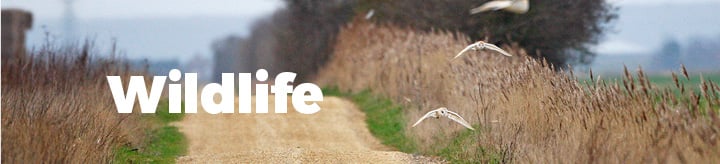
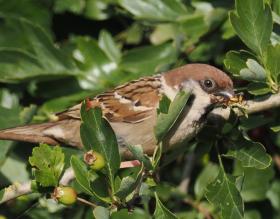
Wildlife won’t have enjoyed May 2026. The cold weather during the middle of the month would have caused some fledglings to die in the nest and during the hot weather, they had to sweat it out in the nest.
The birds in the Vine House Farm garden have been very busy nesting and feeding their young, which I don’t think would be true if I’d followed the RSPB guidelines of only feeding fat. I definitely wouldn’t have had many birds in the garden.
I’ve been feeding mixed seed, soaked sultanas and fat balls to the Blackbirds and Starlings, in a cage to restrict pigeons and Jackdaws from the food. A Moorhen is able to reach the fat balls through the cage as it has a longer neck. The Jackdaws watch the Moorhen feed, and then try and reach in, but are unable to which amuses me – I’m not a fan of Jackdaws!
In the trees across the yard from my office window, there’s a Jackdaw’s nest, not visible now because the tree is in full leaf. As I write this, there is such a commotion going on with many Jackdaws flying around. All of a sudden a Buzzard came flying out, hotly pursued by about 15 Jackdaws; it was in a hurry! Whether it got what it went for, I don’t know.
Tree Sparrows have been doing quite well, they had their first brood a few days earlier than usual and completed it during the first 10 days of May when the weather was still quite nice. Cold weather does make a lot of difference to birds in the nest as they, and their parents, require extra food to keep warm – generally in cold weather there are less insects around. During the cold weather last month, the adults were rebuilding nests and laying eggs and during the hot weather there were two broods of six. Soon, some pairs will be starting their third brood and that’s only possible because they always have seed available to them in feeders.
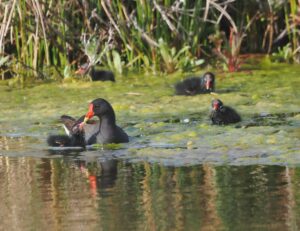
The Moorhens in the in the Café pond are feeding their second brood, with the young from the first brood also helping to feed them. The adults have been carrying some nesting material and I expect they’ll also be on their third brood. The little floating house is a great asset to them as aerial predators can’t see their nest. When a Moorhen nests in the reeds, it is open to predators for a week before the eggs are sat on.
Barn Owls are having a better year – all the nests I’ve visited so far have had five or six eggs, resulting in four or five young. If the weather continues to be kind to voles, there will be enough food for all our Barn Owl sites to be occupied next year.
There are more Sedge Warblers and Reed Buntings in Deeping Fen this year than usual and even a few Reed Warblers too. This is because I persuaded our local drainage board to only mow one side of several drains. Two drains in particular are over two miles in length, and six or seven years ago I would walk down the side of these dykes and, in places, not hear any birds. This year however, after only cutting one side each year for the last four years, there were 16 birds singing in one dyke and 17 in the other. To think I have been surveying these areas for more than 30 years, and finally we’ve had an increase in birds, thanks to the reduction in mowing and the direct drilling of crops.
Related Articles