

It was our hottest July ever; a mean temperature of 19.85°C, one degree warmer than last July and 1.5°C warmer than 1976. With no measurable rain, it was the driest July here for over 200 years.
The drought in 1976 actually started in 1975 as we only had 12 ins or 300 mm of rain from 1st May 1975 to 1st May 1976, our ploughing never got wet that winter. 2011 was the driest year that I have recorded with 13.8ins or 350mm of rain. The driest year in the last 200 years was in 1921, when only 12.7ins or 313mm fell. Notice how the minimum temperatures have been rising.
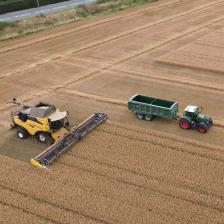
It has been a poor harvest overall. The land we farm where there is a gravel subsoil, fell well below its usual yield. We finished our wheat harvest on 30th July even though we had more acres than usual. Nearly every other farmer has also finished wheat harvest in July.
With the UK having a small harvest, you would think the price of wheat would have gone right up, but it hasn’t. It has increased a bit, but nothing like potatoes may do. Europe is in a drought, so they have less wheat and less potatoes. It is quite easy to bring wheat from Argentina; it costs about $40 USD/tonne and only $50 USD /tonne to bring it from Australia. Wheat is easy to transport around the world, which is why the price has only gone up £20/tonne.
To bring potatoes from Argentina, it may cost $200 USD/ tonne if potatoes of the same quality could be found. They would have to be refrigerated and be in tonne bags, not so easy.
Sunflowers are in full flower, but it’s not a good crop as many of the seeds didn’t germinate because of the dry weather. The millet was drilled around the same time as the sunflowers and that crop is also suffering from the dry weather. The canary seed is better, as that was drilled earlier when there was still moisture in the ground.
The crop we have spent the most time on is potatoes; our irrigators have been going seven days a week and as it’s been so hot we’ve not always been able to give them the quantity of water that they needed. 2025 was a dry summer and that produced a surplus of potatoes, but we feel that as this summer has been so hot and dry, there will be a shortage – but only time will tell.
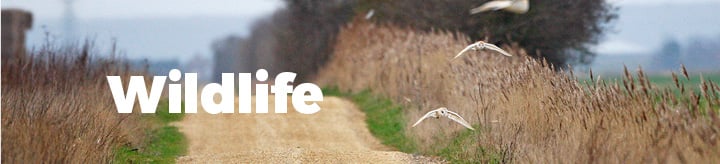
The weather has been good for Barn Owls, but how good it is now for their prey, the field voles, I don’t know, because voles live on grass shoots. They must be keeping their numbers up somehow, as some Barn Owls are going for a second brood. This isn’t necessarily a good thing, because if they produce a lot of young, they will eat all the voles meaning there will be a poor breeding season the next year.
The Cuckoo that was caught on our farm is now in the south of France. He has a new type of tag which is more accurate than the old ones. Over the past two months, we’ve been able to see which ponds and ditches he has visited. Once he crosses the Mediterranean Sea, we will lose contact until he arrives back next spring. The tag weighs only two grams and could have also been fitted to a female if we had caught one. Previously tags have weighed five grams and were only fitted to males, as they are bigger birds.
Some of the Turtle Doves we released are still around the farm, and one was seen before this year’s release carrying a ring from last year. That means at least one of the birds has completed the remarkable migration across the Sahara Desert and back. Turtle Doves are known not to being very site faithful to where they were bred, so having one back from last year is a good sign. Because they have such short legs it is a job to see if they have a ring on and also because they are not site faithful to where they were bred. Several more have probably made a successful migration. If they breed successfully at a site they will most likely return to that site to breed again.
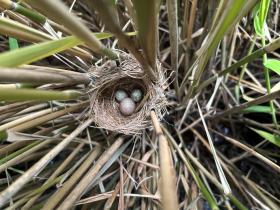
This year I only found one Reed Warbler’s nest containing a Cuckoo’s egg. The Reed Warbler had deserted the nest however, as it didn’t like that large egg in its nest. It built another nest about four yards away and has now reared three young. Most Cuckoos eggs are accepted by Reed Warblers and those Cuckoos that cannot lay an egg similar to a Reed Warblers egg do not pass their genes on.
Tree sparrows are not doing very well. We started off this spring with about 25 pairs but we now only have nine active pairs. The end of July used to be when nearly every pair had broods of four to six, but this year the ones that are nesting only have broods of two to four.
The Sand Martins in our heap of gravel are just fledging their second brood; how many they have been rearing per brood, I don’t know. There are about 70 pairs again this year, fledging their second brood at the end of July, they’re about a month in front of Swallows, who normally fledge their second brood in the first week in September. They are a different species so feed on different food; they rely on finding flies over water, while Swallows rely on farms to find their flies.
Most species of farmland birds will now have fledged their final brood for this year, except for Wood Pigeons, Stock Doves and Swallows. They are still very busy and when I have been picking figs in the polytunnel, the air is full of Wood Pigeons singing away with our double hedge nearby. They are still building nests and will be for the next month, as each nest is only used once.

Related Articles