



How to Grow & Care For Sunflowers
View All BlogsSunflowers (more formally known as Helianthus annuus) are spectacular, colourful flowers that are known for being both easy to grow and reaching great heights in gardens and outdoor spaces. They also play an important role in helping to create a wildlife-friendly garden, with their seeds providing food for a variety of visiting birds.
With Vine House Farm playing host to some of the UK’s largest sunflower fields, we’ve created this in-depth guide, featuring everything you need to know on how to grow and care for sunflowers at home.
What is the Best Sunflower to Plant at Home?
With more than 70 different varieties of sunflower, many people want to find out the best sunflowers for gardens.
Different sunflower varieties will grow to different heights, and tend to require different environments and levels of care. ’’
Some varieties of dwarf sunflowers grow to around 50cm (19’’) high, while other tall varieties can get to 3m (9ft). Below are a selection of favourite varieties.
Giant Sunflowers
Though many sunflower varieties can grow to towering heights, not all of them qualify as ‘giant’.
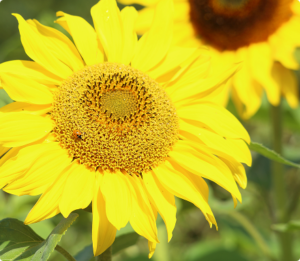
Giant varieties grow for longer than others, which is what gives them their height and flower size. They made ideal feeding areas for birds, who can eat seeds directly from the heads when they bloom.
To grow giant sunflowers in your garden, you can either sow seeds under cover (such as in a greenhouse) in March or straight in the ground from late April-June – once frosts have passed. Sow seeds singly, and ensure the compost is dense and moist.
Sunflowers need a great deal of sunshine to grow and thrive, but ideally, giant sunflowers should be placed in a sheltered position. This will ensure they remain upright as they grow. The sunflower’s roots should be given enough space to grow, and also need nutrient-dense soil to feed the plant. To offer this, plant them straight into the ground or in deep flower beds, dig in organic matter into the soil, or use compost.
Giant sunflowers can get heavy, and have a tendency to grow in different angles, or droop with the weight of the flower head. To mitigate this, use a cane to begin with and then swap this out for something which is taller and weightier as they get bigger. If possible, plant sunflowers under shelter from the wind to help avoid them being torn down in gales and storms.
The Best Giant Sunflowers For UK Gardens

Giraffe Sunflower
As you'd expect from the names, this is a truly giant-sized sunflower. The variety was bred over a 30-year period, in which the plant breeder repeatedly selected and crossed the seeds of the tallest sunflowers. Giraffe sunflowers can reach heights of 5.2m (17ft) and above.

Giant Yellow
This beautiful daisy-like sunflower can grow to a height of approximately 1.8-2.7m (6-9ft) tall. The flower petals are big and bold and, as the name suggests, bright yellow.

Pikes Peak
Pike’s Peak isn’t quite as tall as ‘Giraffe’, but it does feature a good, thick stem making it more suitable if you’re planting in a more exposed location. These varieties can reach heights of 4.6m (15ft). Pike’s Peak flower heads feature big seeds, which make a perfect snack for birds (as well as humans!).
The Best Dwarf Sunflowers for UK Gardens
Sunspot
Sunspot sunflowers are a great option if you want a ‘traditional’ flower that is easy to grow and doesn’t take up too much space. Their petals are bright yellow, with flower heads that give plenty of seeds when they’re blooming. They also have particularly sturdy stalks, which makes them a better choice for more exposed garden spaces.

Teddy Bear
Named after their almost fluffy-looking petals, teddy bear dwarf sunflowers feature bright yellow blooms, with hundreds of long, thin petals that take up most of the flower head. This variety is not only very unique looking, but it is also a great option for those short on space; they grow to about 1m (3ft) tall, yet produce flower heads that span up to 15 cm (6’’) across.
Topolino
Topolino sunflowers grow on a lower plane than other varieties of sunflowers, with their stalks reaching a maximum of 40cm (16’’) tall. They are favoured by many for producing lots of flowers, which branch out instead of growing on single-stem stalks. Topolino flowerheads bear the traditional sunflower look while bearing plenty of seeds for birds and other wildlife.
Unusual Sunflowers For Gardens

Velvet Queen
This sunflower variety features dramatic, dark red flowers, and grows to around 1.8m (6ft) tall.
Earth Walker
Earth Walker sunflowers grow to approximately 1.8m (6ft) tall, and feature flowers in shades of bronze, copper and burnt orange.
Red Sun
As the name suggests, red sun varieties have deep red flowers, with almost black centres. They usually grow to around 1.8m (6ft) tal
Sunflower Growing Tips
Where to Plant Sunflowers
Believe it or not, sunflowers need lots of sunlight to be able to grow! Around 6-8 hours of direct sunlight per day is ideal, especially for bigger varieties.
If you’re initially sowing the seeds under cover in pots, they’ll thrive in a greenhouse or very well-lit window sill.’. When sowing seeds or re-planting in the ground, choose a spot that gets a good amount of sunlight.
Ideally, choose areas that are south facing and sheltered from the wind. If you are unable to do this, use a stake to support stems growing in more exposed areas.
Best Soil Conditions for Sunflowers
Sunflowers are particularly hungry plants; they need a lot of nutrients to grow their bright petals and seeds, particularly if you’re growing larger varieties.
Your soil should be nutrient-rich; if you’re planting under cover or in pots, you’ll want to use peat-free multi-purpose compost. If you’re planting outside, it’s advisable to dig in organic matter or aged manure. If this isn’t possible, work a slow-release fertiliser into the ground. Dig this in when planting, around 20cm (8’’) deep into the ground ideally. Depth is very important here, and this will ensure there’s plenty of food available for your sunflower’s long roots.
To maintain your sunflowers, ensure your soil drains well. Heavy clay soil can retain water, which can lead to irrigation problems and cause root rot for sunflowers. If your garden has clay-heavy soil, dig in peat-free multi-purpose compost into areas where you are planting.
Space
Sunflowers need space from all angles to grow properly. If dug into flower beds or planted in pots, make sure there is enough depth for their roots. Most varieties will need at least 20 cm (8’’) to grow down.
When sowing seeds, thin them to around 30cm (12’’) apart for dwarf varieties, and 1m (3ft) apart for taller varieties.
If you are planting taller varieties, make sure they have enough space to grow upwards to their potential tallest height.
Staking Sunflowers

Not all sunflowers need to be staked. However, some tall varieties that are likely to be exposed to frequent winds can benefit from being supported, to prevent them from falling down.
If you are planting sunflowers in areas where there is less than ideal sunlight, you could also consider using a stake for additional support for sunflowers which are unable to grow a strong stalk.
To stake a sunflower, you can tie it to a cane, solid stick or fence. Use a thin piece of twine to attach the stake to the stem of the sunflower, tying the two with a figure of eight motion. If needed, attachit in a few different areas along the height of the stem.
Sunflower Watering Tips
Sunflowers need different amounts of water depending on which stage of the growing process they are in. For example, germinating sunflower seeds need more water than established plants.
Sunflower seeds take around 10 days to germinate if kept in the right conditions. Keeping the soil moist is especially important at this stage. If you are planting them undercover first, water them daily so that the soil is moist but not wet, and ensure seedling pots are well drained. To retain plenty of moisture at this stage, cover pots in clingfilm.
Sunflowers planted outside need to be kept moist, with rainfall and irrigation. The three weeks after they have bloomed are the most important for keeping them watered, as this will develop the thickness of their stems. Be wary of the soil dampness after rainfall and add more water if it is too dry during periods of low precipitation.
Established sunflowers need less water than seedlings, but the soil should never be dry. Sunflowers are partially drought-resistant but will dry out with extended periods without water, and as well as smaller, duller flowers, this can lead to stems drooping, which can be difficult to correct.
Sunflowers & Insects
Sunflowers are known to be a favourite of slugs and snails, but there are also a number of other garden insects that like to feed on sunflowers.
Though it can be difficult for many to identify and stop different insects from getting to the sunflowers, the best way to do this is to first understand how different insects feed on sunflowers at different stages in their life cycle.
When sunflower seeds start to germinate – in the first 10-15 days after being planted in the ground – they grow into seedlings. They are small and delicate during this stage, and tend to attract smaller garden feeders. Wireworms, cutworms and sunflower beetles are common feeders of seedlings. These insects are all very small to the naked eye, so can be difficult to detect.
When sunflowers enter their ‘vegetative state’ – which describes the period their stem and large leaves develop – thistle caterpillars and weevils can also become an issue.
Later, when plants start to flower, look out for lygus bugs, sunflower moths, sunflower midges and maggots, which like to feed on them during this time.
Sunflower Seed Uses
Sunflower seeds are a nutritious source of food for many animals, including humans. They are also a rich source of energy, protein and natural fats for garden birds, many of which will eat them directly from flower heads.
The best time to harvest sunflower seeds is when the head of the sunflower has turned dry and papery. At this point, you will likely notice that seeds start to drop from the flower head naturally. To harvest these, place a bucket or another vestibule directly beneath to catch fallen seeds. To harvest the rest of the seeds from the flower, cut the sunflower heads from the stalk. The best time to do this is at the end of their bloom cycle, which usually falls in October.
Using a sharp knife, cut an inch below where the head meets the stalk. Place cut heads in a bucket, and then add in lukewarm water so that the flower heads are fully submerged. Leave these for around an hour and the seeds will have come loose from the flower heads. Dispose of heads, stalks and petals in your garden compost or green waste bin.
Once seeds are removed, allow them to dry fully by placing them on a large cloth in the sunlight. Once they are completely dried out, you can remove the outer layer of the seeds (the husks) of the seeds by rubbing them between your hands. This will expose individual seeds (also known as sunflower hearts).
While some birds will readily eat whole sunflower seeds, with the husks intact, some species are unable to crack into them. To cater for a wider variety of birds, include sunflower hearts in your bird food selection.
Which Birds Eat Sunflower Seeds?
Many garden birds love sunflower seeds and will eat them readily from feeders, bird tables or straight from flower heads.


Which Birds Eat Sunflower Hearts
Some soft-billed species are unable to crack whole sunflower seeds with their beaks, but they will eat de-husked sunflower hearts.


About Vine House Farm's Sunflower Fields
At Vine House Farm, we plant seeds at specific times every year, to ensure optimum growth and summer blooms.
We drill black sunflower seeds during May, depending on the weather and the wetness of the ground.
We harvest our sunflower seeds in October. Waiting until this time means the sunflower heads have gone brown and are waiting to die off, and the seeds have dried.
Visit our Sunflower Fields in Lincolnshire
We grow over 100 acres of sunflowers on our farm each year, and when in full bloom the fields of bright yellow are a truly stunning sight. So it’s well worth a visit to our farm in Deeping St Nicholas to join one of our Sunflower tours, during August – see here for details.